Professional Roofing Services in Petaling Jaya & Nearby Areas
Repair, Waterproofing & Replacement
The first sign is rarely the roof itself. It’s a brown ring on the ceiling that wasn’t there last month, a musty smell in the store room after rain, or water tracing its way down a wall during a downpour. By the time you notice it indoors, the roof has usually been letting water in for a while.
This guide walks through the roofing problems we see most often in Petaling Jaya and the surrounding Selangor and KL areas: what causes them, how to spot the early signs, and what a proper repair or replacement actually involves. Whether you own a terrace house, manage a rental unit, or run a shop lot with a leaking porch roof, you’ll find practical, no-nonsense answers here, plus a checklist for choosing a roofing contractor you can actually trust.
What a Roofing Service Should Cover
Roofing work generally falls into four groups: fixing leaks, repairing damaged sections, restoring what’s aged, and replacing or installing what’s new.
| Problem | Common signs | Typical fix |
|---|---|---|
| Roof leak | Ceiling stains, damp patches, drips during rain | Trace the leak source, seal or replace the faulty section |
| Broken or displaced roof tiles | Cracked, shifted or missing tiles | Replace or resecure affected tiles |
| Ageing or porous roof | Faded, chalky or moss-covered surface | Roof waterproofing or restoration coating |
| Rusted or leaking metal roof | Rust spots, leaking seams, loose screws | Metal roof repair, screw and seal replacement |
| Blocked or damaged gutters | Overflowing water, sagging gutters | Roof gutter repair or replacement |
| End-of-life roof | Repeated leaks despite repairs, sagging structure | Roof replacement or reroofing |
Common Roof Types in Klang Valley Homes
Before diagnosing a problem, it helps to know what you’re working with:
- Concrete or clay roof tiles – common on older terrace houses and bungalows across PJ, Subang Jaya and Damansara. Durable, but individual tiles crack or shift over time.
- Metal roofing (zinc, metal deck, colour-coated steel) – common on newer landed homes, factories and extensions. Lightweight and fast to install, but prone to rust at screw points and leaking seams if not sealed well.
- Roof tile with waterproof coating – ageing tile roofs are often resurfaced with a waterproof coating instead of a full retile, which extends their life at a fraction of replacement cost.
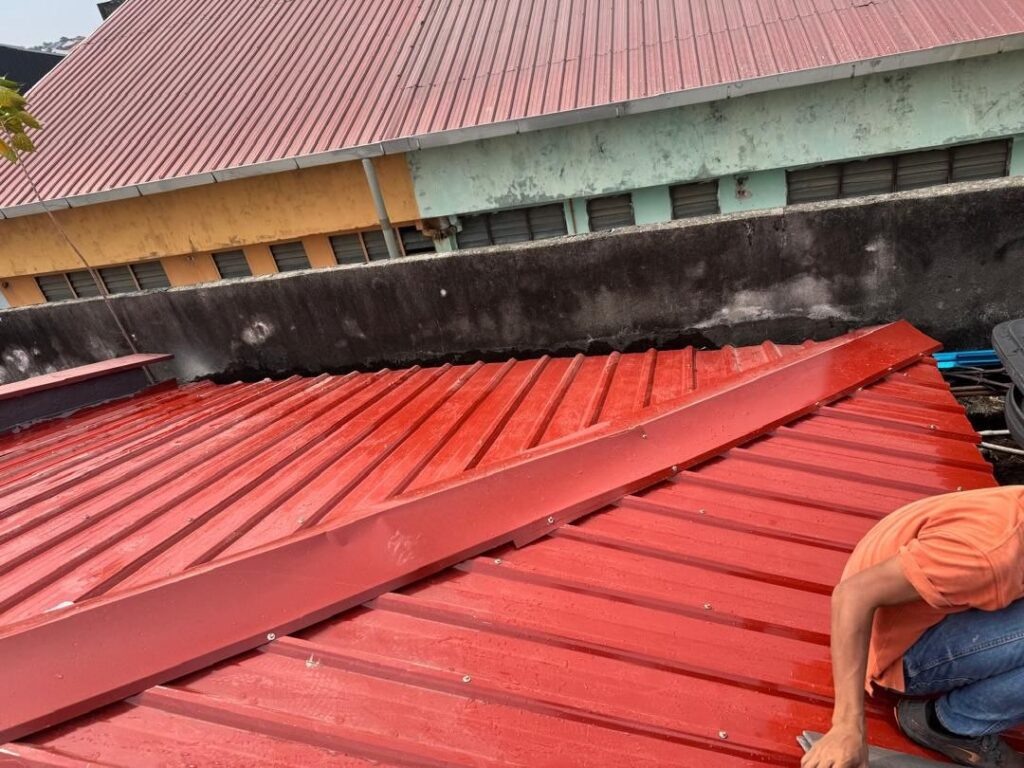
Recoating a metal roof to protect it from rust and future leaks.
Roof Leaks: Causes, Warning Signs and How We Trace Them
A leaking roof rarely leaks exactly where the stain appears. Water travels along rafters, battens and ceiling boards before it drips or shows through, so the real entry point can be a metre or more away from the mark on your ceiling.
Roof leak repair and leaking roof during heavy rain
Roof leak during heavy rain is one of the most common calls we get, especially during the monsoon months. Typical causes include:
- Cracked or displaced roof tiles
- Deteriorated flashing around chimneys, skylights or wall junctions
- Rusted-through metal sheeting or loose roofing screws
- Blocked valleys where two roof slopes meet, letting water pool and seep in
- Hairline cracks in ageing waterproofing coats
How we trace a roof leak:
- Check the ceiling stain’s shape and position from inside the roof space if accessible.
- Inspect the roof section directly above and slightly uphill from the stain.
- Look for common failure points first: tile laps, ridge lines, flashing and valleys.
- Use a hose test on a dry day to recreate the leak under controlled conditions if the source isn’t obvious.
- Confirm the fix by checking again after the next rain.
Ceiling water stains from roof leaks
Ceiling water stains from roof leak don’t always mean an active drip. A stain can be old damage from a leak that was already fixed, or it can signal a slow, ongoing seep. Press gently around the stain: if the ceiling board feels soft or spongy, water is still getting in, and it’s worth booking a roof inspection sooner rather than later.
Roof Tiles, Ridges and Metal Roofing Repair
Roof tile replacement and repair
Repair damaged roof tiles usually means resetting shifted tiles or replacing broken ones outright. A single cracked tile is a quick fix, but tiles that are cracking in clusters, especially on an older roof, often point to a coating that has worn through and is letting water soak into the tile material itself.
Metal roof repair
Metal roof repair typically deals with rust at screw penetrations, worn rubber washers, and lifted or loose sheet edges after strong wind. Left alone, a single rusted screw hole can let in surprising amounts of water during a storm. Replacing worn screws with proper sealed roofing screws, and resealing lap joints, solves most metal roof leaks.
Roof ridge repair
The ridge, the highest point where two roof slopes meet, takes constant sun and rain exposure. Roof ridge repair usually involves re-bedding loose ridge tiles or ridge capping and resealing the joint, since a failed ridge is a common (and often overlooked) source of leaks near the top of the roof.
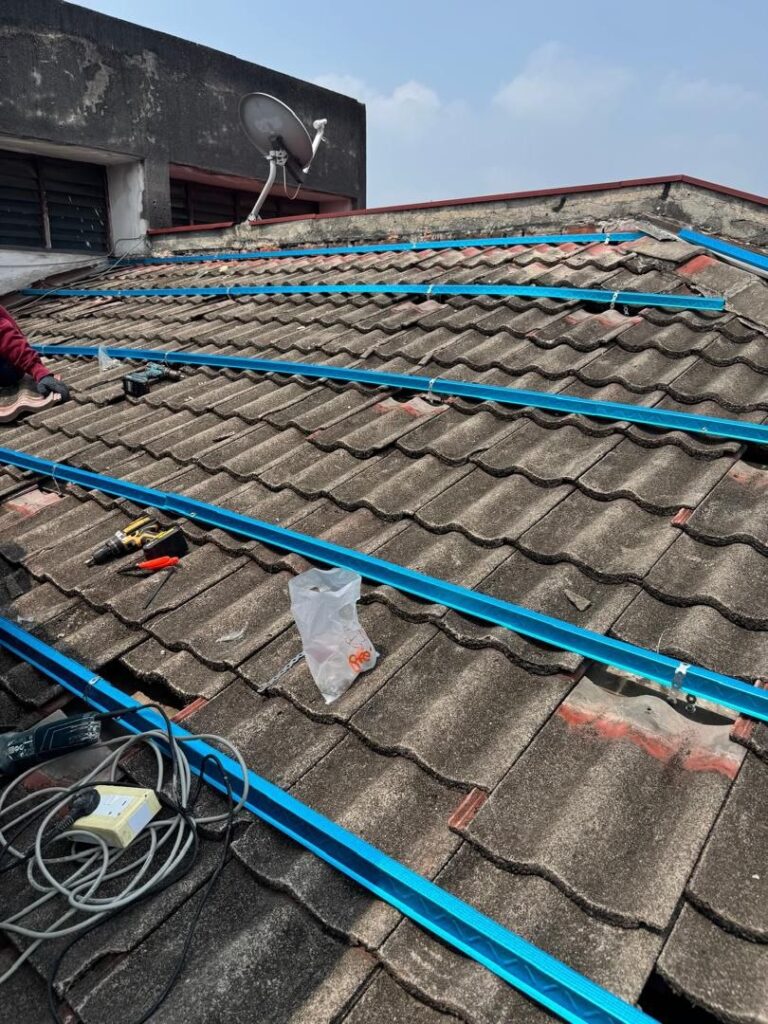
Fitting mounting rails over an existing tile roof as part of a roofing upgrade.
Roof Waterproofing and Restoration
Not every ageing roof needs full replacement. Roof waterproofing applies a protective membrane or coating over tiles or metal sheeting, sealing hairline cracks and porous surfaces before they turn into active leaks. Roof restoration goes a step further, combining cleaning, tile repair and a fresh waterproof coat to extend the roof’s life by years.
This approach works well for:
- Ageing tile roofs that are structurally sound but showing wear
- Roofs with widespread minor leaks rather than one clear source
- Owners who want to delay the cost of full replacement
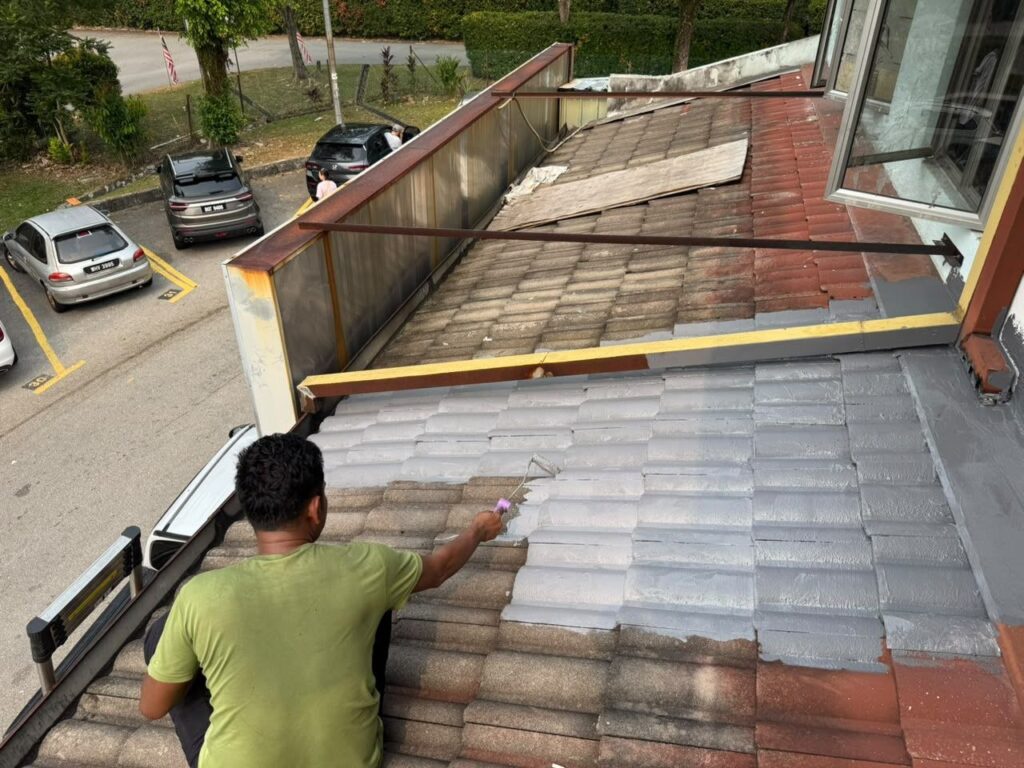
Applying a waterproof coating to restore an ageing tile roof.
Roof Replacement and Installation
Sometimes repair isn’t enough. Roof replacement or roof installation makes sense when:
- Leaks keep returning in different spots despite repairs
- The roof structure is sagging or the timber underneath has rotted
- You’re renovating and changing the roof design or material
- The roof has genuinely reached the end of its service life (concrete tiles typically last decades, but underlying waterproofing and battens wear out sooner)
A proper roof installation includes checking and, where needed, replacing the battens and structure underneath, not just laying new tiles or sheets over old, weakened support.
This comes up especially often in Subang Jaya’s older sections, SS12 through SS19 in particular, where many original roofs are now decades old and past the point where another patch repair makes sense. If you’re weighing repair against replacement for a roof that age, our roof replacement work in Subang Jaya covers exactly this kind of ageing-roof scenario.
Gutters and Roof Drainage
A roof can be in perfect condition and still cause water damage if the gutters can’t cope. Roof gutter repair and roof drainage problem fixes typically involve:
- Clearing leaves, silt and debris (a bigger issue near trees and during dry spells before the rain arrives)
- Resealing leaking gutter joints
- Correcting gutter slope so water actually flows to the downpipe instead of pooling and overflowing
If water is overflowing at one specific point of the gutter during rain, that’s usually your first clue to where the blockage or sag is.
Residential vs Commercial Roofing
- Residential roofing covers terrace house roof repair, landed house roof repair, porch roof repair and porch roofing, usually smaller in scale and often needing to work around occupied homes.
- Commercial roofing covers factories, shop lots and larger flat or low-slope roofs, where access, safety planning and minimising business downtime matter more.
Both need the same careful diagnosis. The difference is mostly in scale and scheduling.
Roofing in Petaling Jaya and Surrounding Areas: What's Different Here
Roofing needs shift depending on the neighbourhood:
- Older landed homes (SS2, Section 17, Taman Sri Manja): ageing tile roofs, worn flashing, and roofs that have had patchwork repairs over the years.
- Newer landed and gated homes (Bandar Utama, Mutiara Damansara, Kota Damansara): more metal roofing and larger porch and car porch roof structures.
- Commercial and shop lot areas (Uptown PJ, SS2): flatter roof sections and higher foot traffic overhead from air-con units and signage installations.
- Areas further out (Bangsar, Mont Kiara, parts of KL within a 15 km drive): a mix of older bungalows and higher-end homes, often with more elaborate roof lines and multiple valleys where leaks like to start.
Heavy monsoon rain between roughly November and January puts every roof type to the test, which is why a roof inspection before the wet season is worth the hour it takes. Property owners in Petaling Jaya and its surrounding neighbourhoods tend to see this pattern most clearly, since the area’s mix of older and newer housing stock means we’re often comparing a 20-year-old tile roof against a 5-year-old metal one on the very same street.
How to Choose a Roofing Contractor
- Ask how they diagnose leaks, not just how they quote repairs. A contractor who inspects before quoting is more likely to fix the actual cause.
- Check for proper access and safety equipment. Roof work done without harnesses or proper ladders is a red flag, not a sign of speed.
- Get an itemised quote covering materials, labour and any scaffolding or access costs.
- Ask about workmanship warranty, in writing.
- Ask what happens if rain interrupts the job. A roof left half-open overnight can cause more damage than the original leak.
- Check reviews or past work, ideally for properties similar to yours (terrace vs bungalow vs shop lot).
Metal Roof vs Tile Roof
| Factor | Metal roofing | Tile roofing |
|---|---|---|
| Typical lifespan | Long, but coating and screws need upkeep | Very long for the tile itself; waterproofing needs refreshing |
| Common failure point | Rusted screws, worn seams | Cracked or shifted tiles, worn coating |
| Repair speed | Usually faster | Can take longer if tiles need matching |
| Noise in heavy rain | Noticeably louder | Quieter |
| Best suited to | Extensions, porches, factories | Traditional landed homes |
Simple Roof Maintenance Checklist
- Twice a year: Look up at your roof from ground level for shifted, cracked or missing tiles, or rust spots on metal sheeting.
- Before monsoon season: Clear gutters and check for loose ridge tiles or lifted metal sheet edges.
- After any storm with strong wind: Check for displaced tiles or sheets, especially near ridges and valleys.
- When you spot a ceiling stain: Don’t wait for it to spread. Book a roof inspection while the leak is still small and easier to trace.
- Every few years on an older roof: Consider a waterproofing or restoration coat before leaks start, rather than after.
Frequently Asked Questions (FAQs)
1. How do I know if my roof is actually leaking or if it’s just an old stain?
Press gently around the stain after a dry spell. If it feels soft or damp, or a new ring appears after the next rain, the leak is still active and worth inspecting.
2. Why does my roof only leak during heavy rain, not light rain?
Heavy rain adds pressure and volume that light rain doesn’t, pushing water through small gaps, worn flashing or blocked valleys that hold up fine under normal conditions.
3. Can a single cracked roof tile really cause a big leak?
Yes. Water finds the smallest opening and can travel along the roof structure before showing up on the ceiling, sometimes well away from the actual cracked tile.
4. Is roof waterproofing enough, or do I need a full roof replacement?
If the roof structure is sound and the problem is surface wear or scattered minor leaks, waterproofing or restoration is usually enough. Replacement makes more sense when leaks keep recurring in different spots or the structure underneath has deteriorated.
5. How often should I get a roof inspection?
Twice a year is a good baseline, ideally once before the monsoon season, plus an extra check after any major storm.
6. What is the difference between roof repair and roof restoration?
Repair fixes a specific problem, like a broken tile or a rusted screw. Restoration is broader, combining cleaning, repairs and a fresh waterproof coating to extend the whole roof’s life.
7. My gutters are overflowing during rain. Is that a roofing problem?
Usually yes. Blocked, sagging or poorly sloped gutters can’t carry water away fast enough, which sends it back toward the roof edge and fascia instead of the downpipe.
8. Do you handle both residential and commercial roofing?
Yes, from terrace and landed house roof repair to commercial and shop lot roofing, including work scheduled around business hours to minimise downtime.
Get Your Roof Sorted Before the Next Downpour
A leaking roof rarely gets better on its own, and every rainy season it’s left untreated tends to make the eventual repair bigger. If you’ve spotted a ceiling stain, a cracked tile, or water pooling somewhere it shouldn’t, we’re happy to take a look and tell you plainly what’s going on. And if that roof leak has already reached your plumbing or ceiling below, our plumbing service covers that side of the damage too, so you’re not juggling two separate contractors for one water problem.
Send us a message on WhatsApp with a few photos of the affected area, and we’ll advise on the best next step. If you prefer to speak over the phone, please give us a call.
Service Area
- Petaling Jaya
- Subang Jaya
- Puchong
- Shah Alam
- Klang
- Kuala Lumpur